About 45 min one-to-one, or 55 min with a small group
1. Warm up (5 to 10 min): Ask the quick questions with notes closed.
2. Teach: Work through the lesson slides in order.
3. Coach practice: Use the student examples and try-it tasks.
4. Check: Finish with the outcome prompts below.
Warm-up questions
What did the last meal tutors ate get its energy from, two steps back?Listen for: For example, a burger came from a cow, which ate grass that used sunlight. Listen for a chain that ends at a producer.
Which way should the arrow point between a hare and a lynx in a food chain?Listen for: From the hare to the lynx, showing where the energy goes. Pointing the arrow at the hare is the most common slip.
What happens to fallen leaves in a forest over a winter?Listen for: Fungi and bacteria break them down. Naming decomposers shows they see the whole system.
What to check they understood
A1.3
Ask them to draw the aspen, hare, lynx chain with arrows and label each trophic level in words.
A strong answer shows arrows pointing from aspen to hare to lynx, names the aspen as producer, the hare as primary consumer and the lynx as secondary consumer, and adds fungi as decomposers.
A1.7
Ask them to explain why a food web describes a parkland better than a single food chain.
A strong answer says most organisms eat and are eaten by more than one species, so a web shows the many feeding links and how a change to one species spreads through others.
Likely gaps from earlier grades
Arrow direction trips many students. Remind them the arrow means gives energy to.
Decomposers are often left off food webs completely.
Class slides
Work through the class slides
1 / 7
Aspen leaves end up as lynx muscle
A snowshoe hare spends the evening clipping aspen twigs in parkland snow.
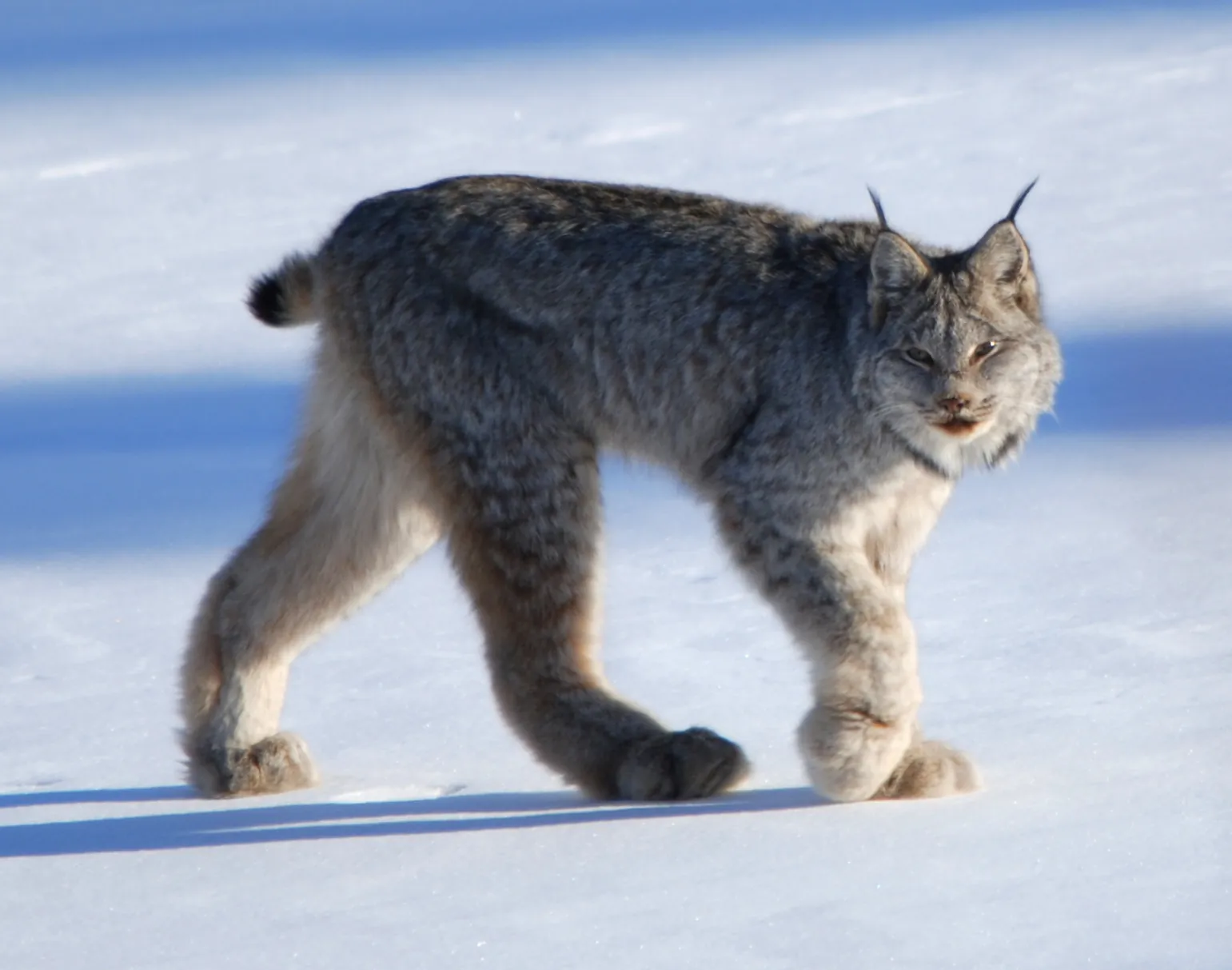
A lynx later takes that hare, and leaf litter still feeds fungi under the snow.
A Canada lynx eats mostly snowshoe hares, and the hares eat twigs and bark. That makes the lynx a secondary consumer, two steps away from the plants that first captured the sunlight.