With oxygen, mitochondria build a tall ATP stack. Muscle can use lactic acid and yeast can use alcohol, and both short paths matter in food, fitness, and pollution.
About 45 min one-to-one, or 55 min with a small group
1. Warm up (5 to 10 min): Ask the quick questions with notes closed.
2. Teach: Work through the lesson slides in order.
3. Coach practice: Use the student examples and try-it tasks.
4. Check: Finish with the outcome prompts below.
Warm-up questions
Why do their muscles burn during a hard sprint?Listen for: They use a fast path with little oxygen and build up lactic acid. Listen for the link to low oxygen.
How does yeast make bread rise?Listen for: It ferments sugar and releases carbon dioxide gas. Any mention of gas from yeast is good.
Which gives more ATP from one glucose: aerobic respiration or fermentation?Listen for: Aerobic respiration, by far. This tests whether they see fermentation as a short, low-yield route.
What to check they understood
C2.3
Ask them to compare aerobic respiration, lactic acid fermentation and alcohol fermentation by products and ATP yield.
A strong answer says aerobic respiration makes carbon dioxide, water and a large amount of ATP, lactic acid fermentation in muscle makes lactic acid and little ATP, and yeast makes alcohol, carbon dioxide and little ATP.
C2.5
Ask them to use the pea data to explain why germinating peas warm up and use more oxygen than dry peas.
A strong answer says germinating peas respire quickly to supply energy for growth, using oxygen and releasing heat, while dormant peas respire very slowly.
Likely gaps from earlier grades
A common idea is that a sprint switches off cellular respiration. Both routes start with glycolysis and run together.
Class slides
Work through the class slides
1 / 7
Three branches from pyruvate
The oxygen branch shows a mitochondrion and a tall ATP stack.
Muscle shows lactic acid and a short stack. Yeast shows alcohol, carbon dioxide, and a short stack.
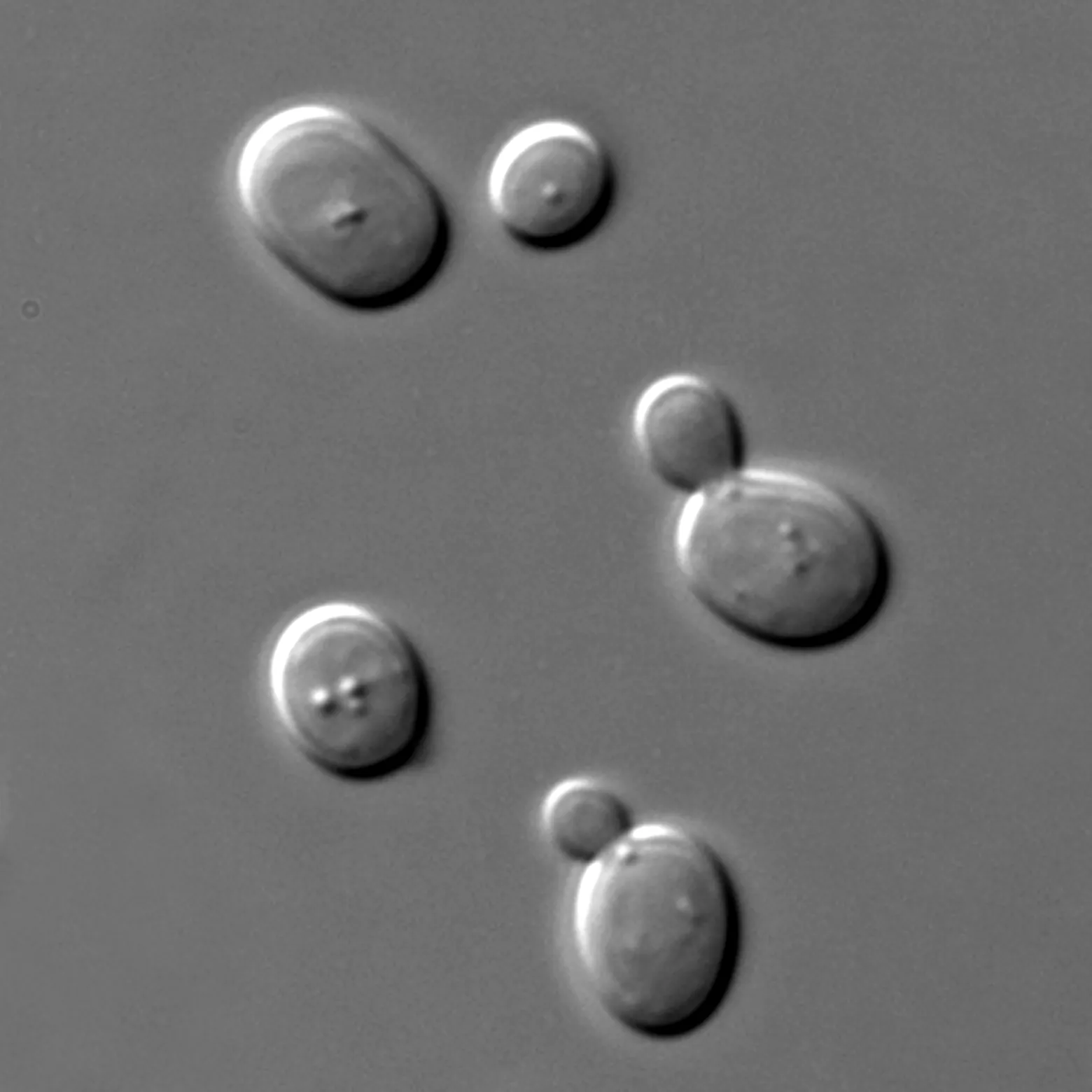
Baker's yeast seen through a light microscope. The small round bumps are new cells budding off. With little oxygen, yeast turns pyruvate into alcohol and carbon dioxide, and the gas is what makes bread dough rise.