About 45 min one-to-one, or 55 min with a small group
1. Warm up (5 to 10 min): Ask the quick questions with notes closed.
2. Teach: Work through the lesson slides in order.
3. Coach practice: Use the student examples and try-it tasks.
4. Check: Finish with the outcome prompts below.
Warm-up questions
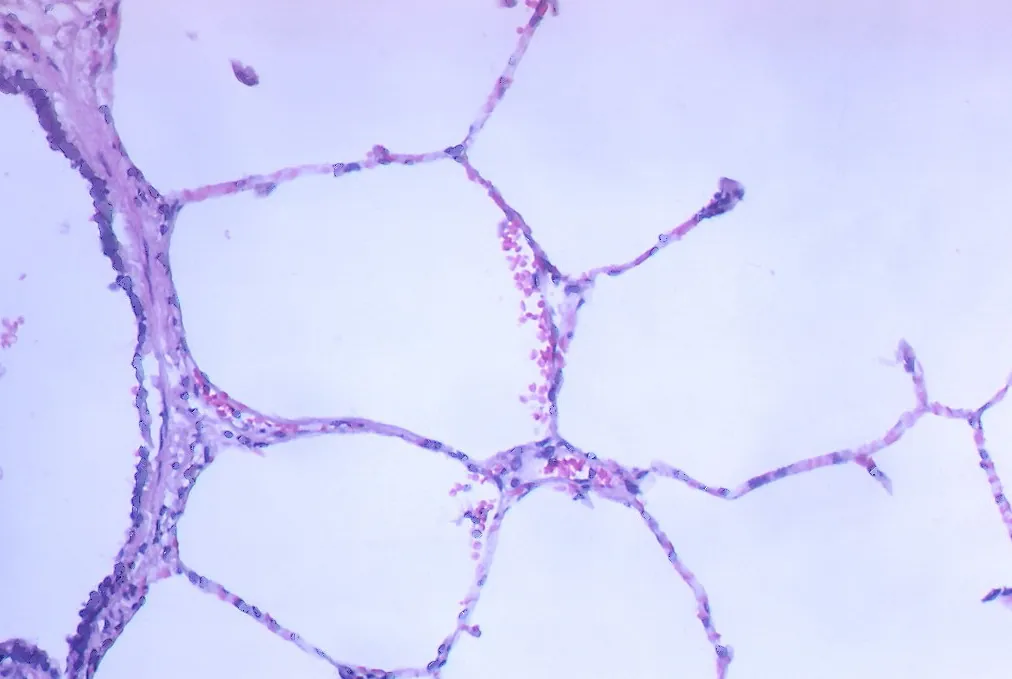
Their lungs hold millions of tiny air sacs, like a bunch of grapes. What would they lose if they were one big balloon?Listen for: Many small sacs give a huge surface area for gas exchange. Listen for surface area.
When tutors breathe in, what does their diaphragm do?Listen for: It contracts and moves down, making room for air. This checks the mechanics of breathing.
How can smoking affect a family member who lives with a smoker?Listen for: Second-hand smoke exposes them to the same chemicals. A real example shows they see health beyond the smoker.
What to check they understood
D1.5
Ask them to describe gas exchange at an alveolus, naming which way each gas moves and why.
A strong answer says oxygen diffuses from the air sac into the blood and carbon dioxide diffuses from the blood into the air sac, each moving from higher to lower concentration across a thin wall.
D1.7
Ask them to explain two ways smoking damages the respiratory system.
A strong answer says smoke paralyzes or destroys cilia so mucus and particles build up, and damages alveoli walls, which reduces the surface for gas exchange.
Likely gaps from earlier grades
Some students think carbon dioxide enters the blood at the alveolus. Ask which gas the body is getting rid of.
Class slides
Work through the class slides
1 / 7
Two arrows at a thin wall
A green oxygen arrow runs from the air sac into the blood.
An orange carbon dioxide arrow runs from the blood into the air sac.
A thin slice of healthy human lung under a microscope. Each open space is an alveolus, an air sac. The pink walls between them are so thin that oxygen and carbon dioxide cross them in a fraction of a second.