About 35 min one-to-one, or 45 min with a small group
1. Warm up (5 to 10 min): Ask the quick questions with notes closed.
2. Teach: Work through the lesson slides in order.
3. Coach practice: Use the student examples and try-it tasks.
4. Check: Finish with the outcome prompts below.
Warm-up questions
What material do tutors think is inside a spark plug that keeps the electricity from escaping?Listen for: A ceramic, aluminum oxide. Any guess of ceramic or a hard insulating material is good.
Before opening a chemical bottle in a lab, what should tutors read?Listen for: The label and its WHMIS symbols. This checks safety habits.
A balance reads 2.350 g. How many significant digits is that?Listen for: Four. This checks a skill they will use in every report.
What to check they understood
20-A1.3sts
Ask them to describe one technology that depends on what researchers learned about ionic or crystal structures.
A strong answer names an example such as a ceramic spark plug insulator or a doped silicon chip, and explains how knowledge of the crystal grid let engineers design it.
Attitudes: safety
Ask them to read a sample bottle label and say what precautions they would take before using the chemical.
A strong answer names the hazard symbols, states the gear needed such as goggles and gloves, and says where to find the safety data sheet before opening the bottle.
Likely gaps from earlier grades
Students may treat every crystal as the same as salt. Compare a silicon chip and a salt crystal to show different bonding.
Class slides
Work through the class slides
1 / 6
Spark plugs and computer chips
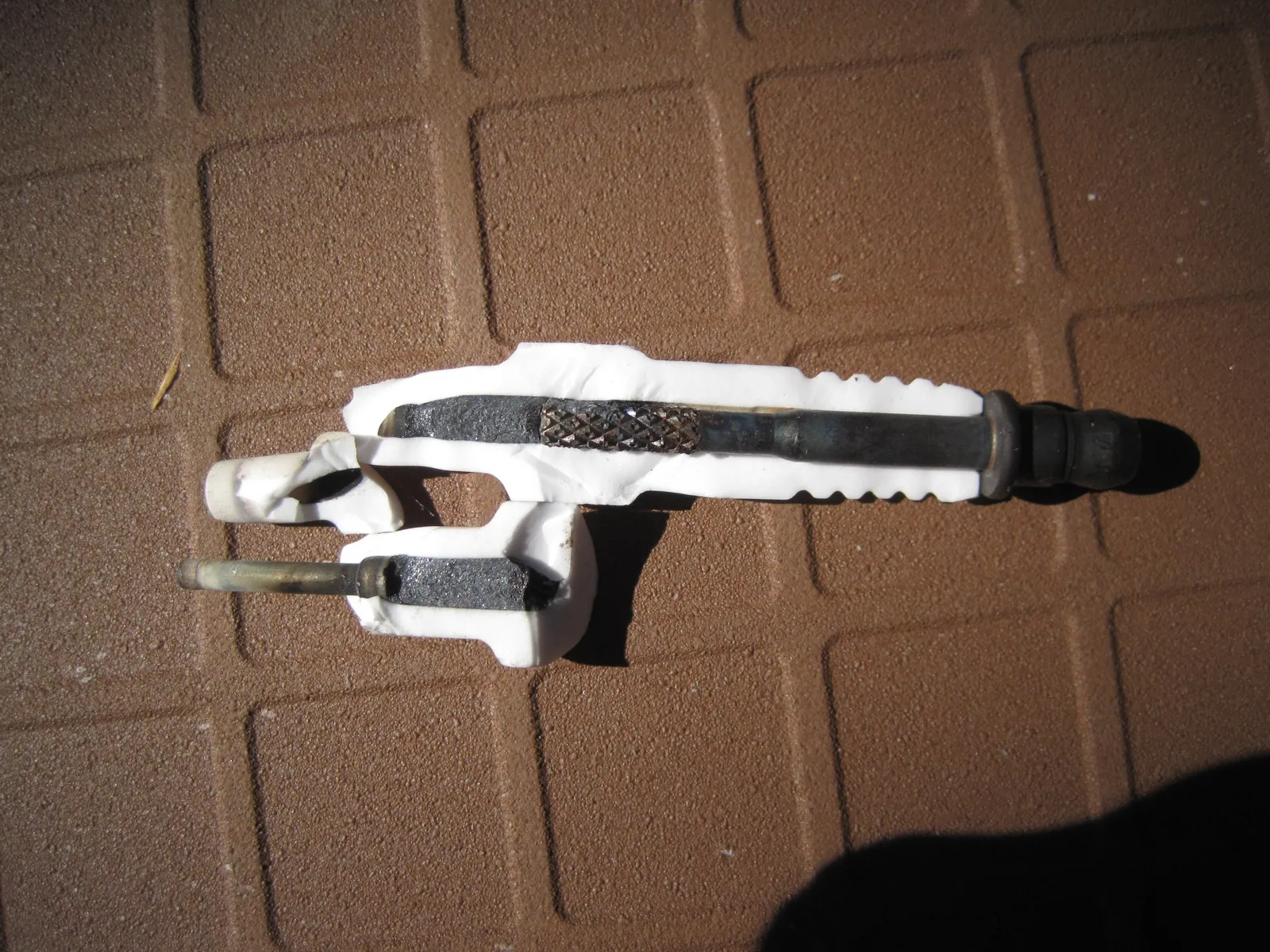
An aluminum oxide insulator in a spark plug is fired from a lattice that researchers already mapped.
A silicon wafer is doped in a factory using what researchers learned about electrons in that crystal.
A spark plug broken open. The white part is an aluminum oxide ceramic, an ionic solid. Its ions are locked in a lattice, so it carries almost no current and survives engine heat. That keeps the spark at the tip where it belongs.