About 50 min one-to-one, or 60 min with a small group
1. Warm up (5 to 10 min): Ask the quick questions with notes closed.
2. Teach: Work through the lesson slides in order.
3. Coach practice: Use the student examples and try-it tasks.
4. Check: Finish with the outcome prompts below.
Warm-up questions
When a car brakes, where does its kinetic energy go?Listen for: Mostly into heat in the brakes. Listen for energy changing form, with destroyed as the common slip.
How does a hybrid car save energy when it stops?Listen for: It uses regenerative braking to charge its battery. This links energy to technology.
Name one renewable energy source used in Alberta.Listen for: Wind, solar or hydro. This connects to local energy choices.
What to check they understood
20-C2.1sts
Ask them to explain how one technology, such as regenerative braking or a wind turbine, transfers mechanical energy.
A strong answer describes the energy chain, for example a turbine changing the wind's kinetic energy into electrical energy, and names where some energy is lost as heat or sound.
Attitudes: stewardship
Ask them to compare two ways of producing electricity in Alberta, naming one benefit and one cost of each.
A strong answer compares sources such as wind and natural gas, naming benefits like low emissions or steady supply and costs like intermittent output or greenhouse gases.
Likely gaps from earlier grades
Students may say energy is lost or used up. Push them to name the form it changed into.
Class slides
Work through the class slides
1 / 7
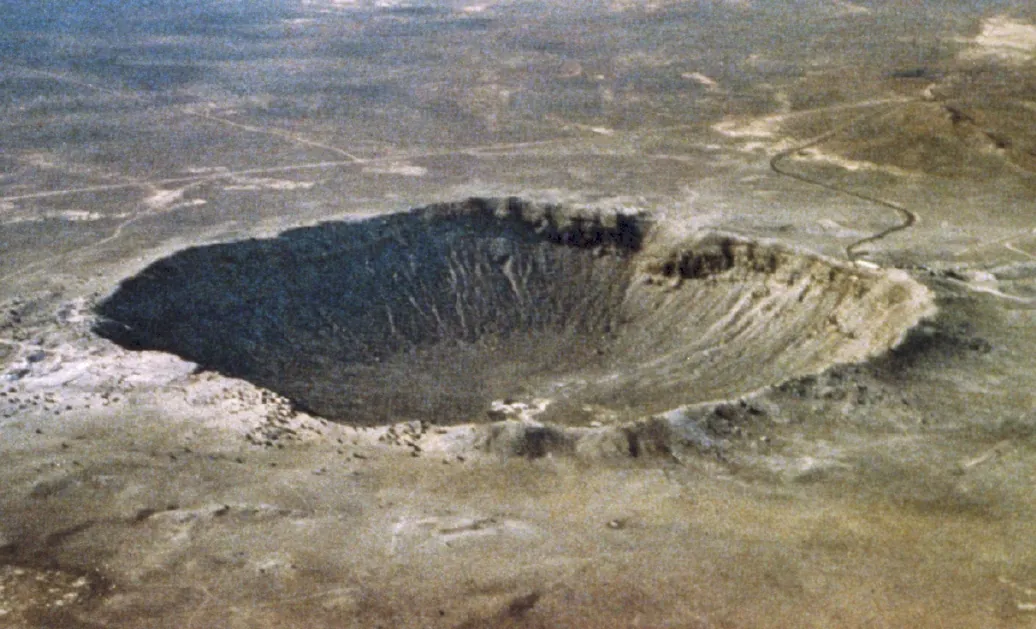
A meteor meets the ground
A meteor of mass 2.40 times 10 to the fifth kilograms hits at 1.10 times 10 to the fourth m/s.
Its kinetic energy is 1.45 times 10 to the thirteenth joules, a sudden transfer into the ground.
Meteor Crater in Arizona is more than a kilometre across. About 50 000 years ago, a meteorite struck here at very high speed. Its kinetic energy became thermal energy, sound, and the work of blasting rock out of the ground.