About 25 min one-to-one, or 35 min with a small group
1. Warm up (5 to 10 min): Ask the quick questions with notes closed.
2. Teach: Work through the lesson slides in order.
3. Coach practice: Use the student examples and try-it tasks.
4. Check: Finish with the outcome prompts below.
Warm-up questions
What does a hawk eat, and what eats the hawk's food?Listen for: Mice, which eat seeds. This sets up food chains.
Why are there more plants than wolves in an ecosystem?Listen for: Energy is lost at each level. Listen for the pyramid.
What could make a population of rabbits grow?Listen for: More food, fewer predators. This sets up population factors.
What to check they understood
D2.4
Ask them to draw a food web with at least five organisms and label producers and consumers.
A strong answer draws arrows from food to eater, names producers, primary and secondary consumers, and includes decomposers.
D2.5
Ask them to explain why an energy pyramid gets narrower at the top.
A strong answer says most energy is lost as heat at each level, so less is available higher up.
D2.6
Ask them to predict what happens to the rabbits if wolves are removed.
A strong answer says rabbits increase at first, then may crash when food runs short.
Likely gaps from earlier grades
Students draw arrows from eater to food. Arrows show the direction energy moves.
Class slides
Work through the class slides
1 / 7
A grassland food chain
One chain is a single path: grass to grasshopper to meadowlark.
A web adds the other meals those animals also eat and the animals that eat them.
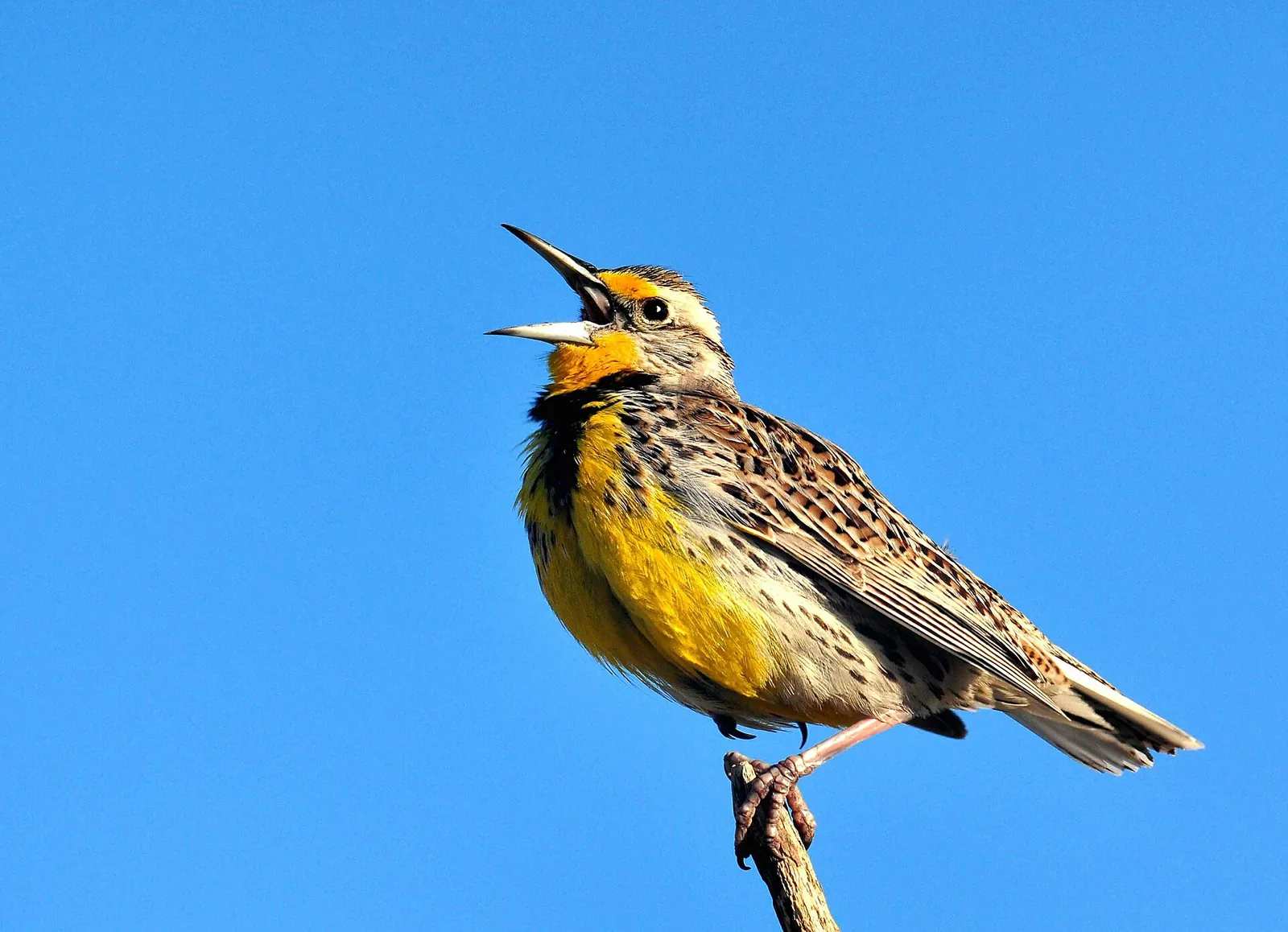
A western meadowlark, a common grassland bird in Alberta. It eats grasshoppers and other insects in summer and seeds in other seasons. Those extra meals turn a single food chain into a food web.