Four public expressions
- A Métis youth wears a sash and plays fiddle tunes learned from an aunt at a community gathering.
- A Sikh classmate ties a dastaar before school as part of religious practice.
- A Francophone troupe rehearses a play in French for parents and neighbours.
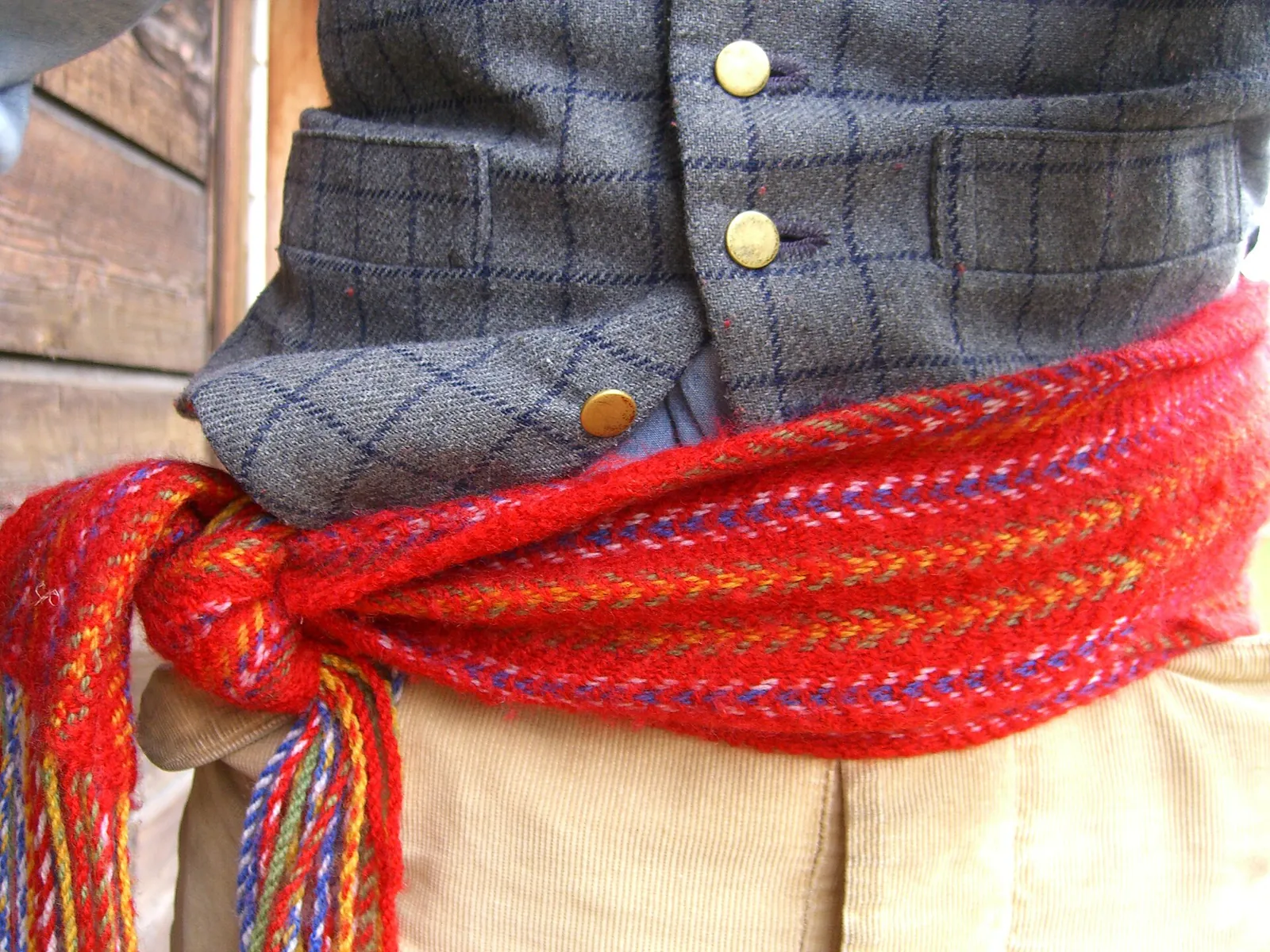
A ceinture fléchée, or arrow sash, worn at Fort Langley National Historic Site in British Columbia. Fur trade workers tied these finger woven wool sashes around their waists. Today the sash is a proud symbol of Métis identity, and Métis families teach young people how to weave it and when to wear it.
Photo: Ceinture-fléchée-ftl by Themightyquill, Wikimedia Commons, CC BY 3.0