Trade flows and the 1944 meeting
- A pallet of Alberta canola leaves Vancouver for Osaka, and the buyer pays the exporter from a bank in Japan.
- In 1944, Allied delegations at Bretton Woods created the International Monetary Fund (IMF), which lends money to countries in trouble.
- They also created the World Bank, which lends money for projects such as roads, schools, and power.
- A container ship carries goods in same-size metal boxes from truck to ship to train, which made ocean freight cheaper and faster.
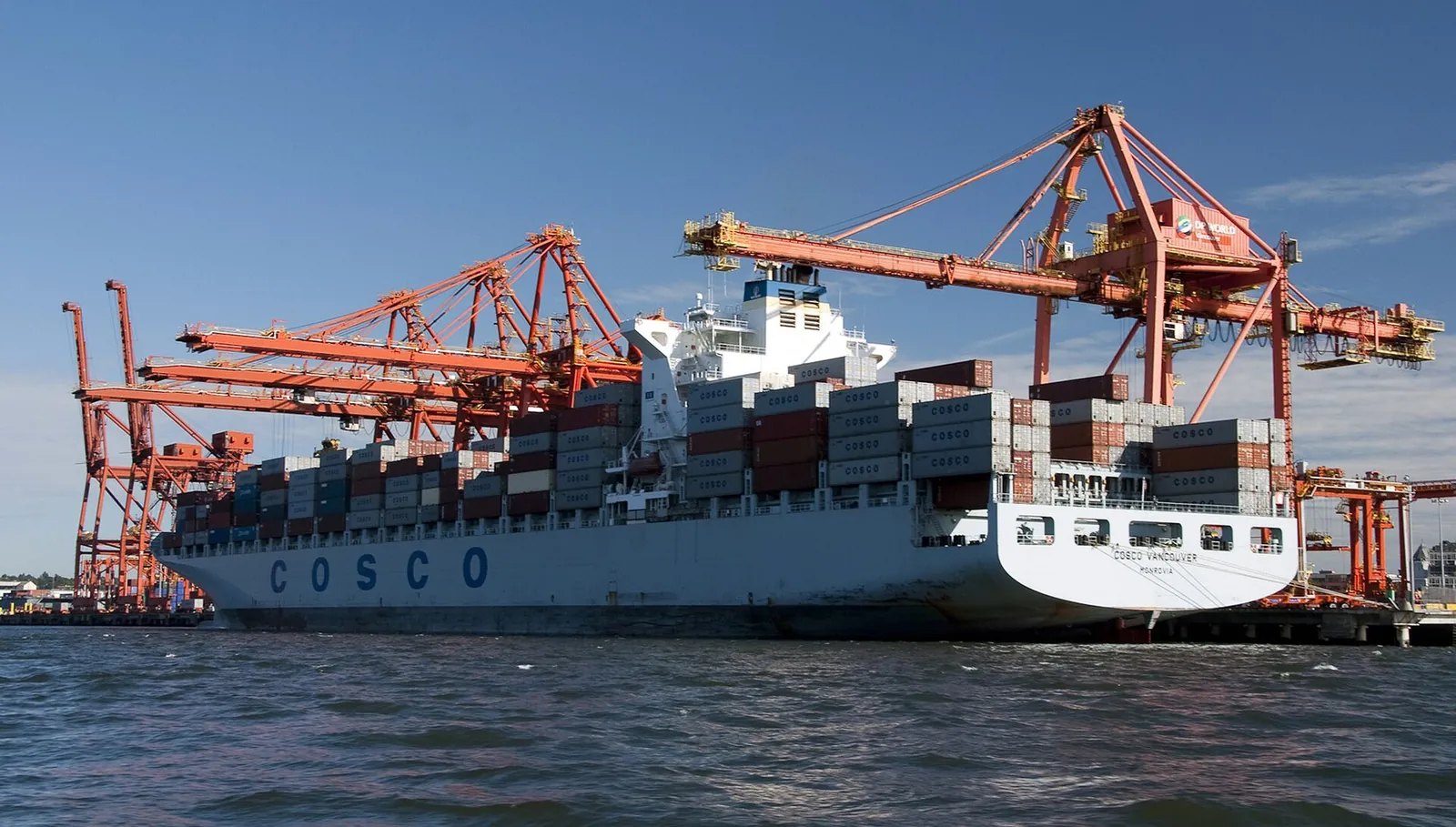
A container ship at a terminal in Vancouver. Alberta canola and many other exports leave Canada in same size steel containers like these. Cranes can lift each box straight onto a train or truck, which cuts the cost of trading with buyers in Asia.
Photo: COSCO Vancouver (ship, 2004) 001 by Caelie Frampton from Vancouver, BC, Canada, Wikimedia Commons, CC BY 2.0