Oil sands and livelihoods
- Northern Alberta's oil sands, in the Athabasca, Cold Lake, and Peace River deposits, are a major resource development region.
- Workers, contractors, and public royalties and taxes are the prosperity evidence people in the region and in the province can point to.
- Open pit mines, in situ wells, tailings, water use, and greenhouse gas emissions are the land, water, and climate evidence.
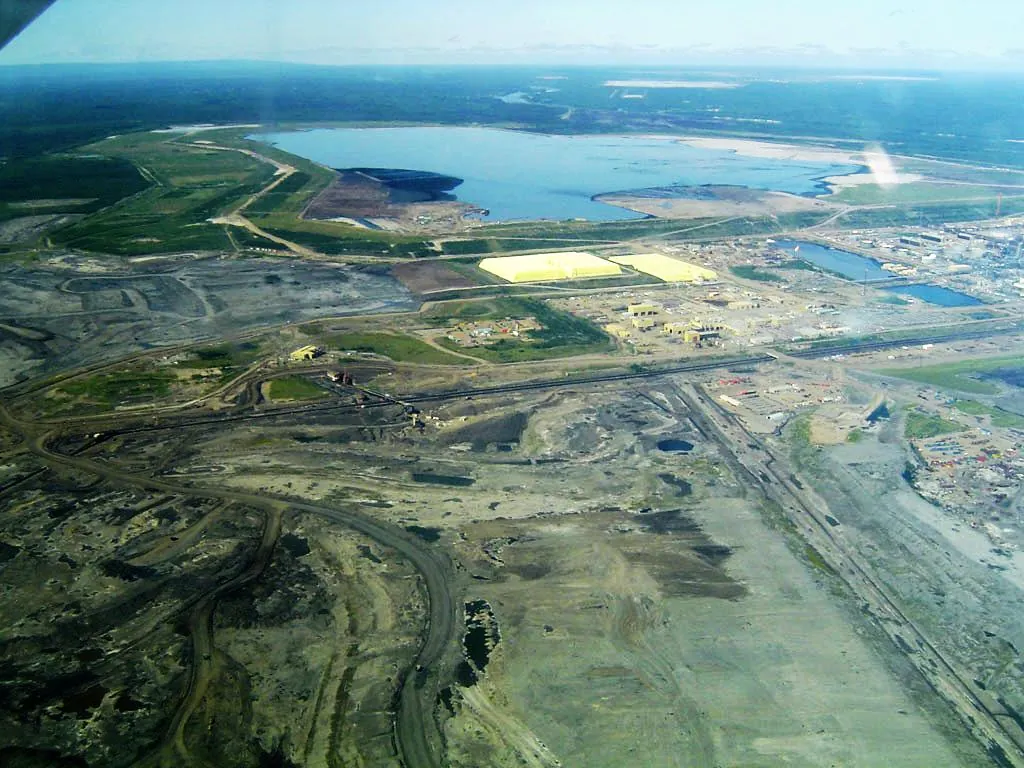
The Syncrude Mildred Lake plant north of Fort McMurray, in the Athabasca oil sands. The plant turns bitumen into synthetic crude oil and pays wages, royalties, and taxes. The wide pond holds tailings, the water and clay left after processing, which is a long term concern for the watershed.
Photo: Syncrude mildred lake plant by TastyCakes (colour adjusted by Jamitzky), Wikimedia Commons, public domain