Two voices on one sash
- Museum label, 1970: "Métis sash. Voyageur costume from the fur trade."
- Métis educator, 2024: "People wear this sash at gatherings. It is a living symbol of Métis peoplehood."
- Each text has its own creator, year, audience, and purpose, so students read those before students decide what the sash means.
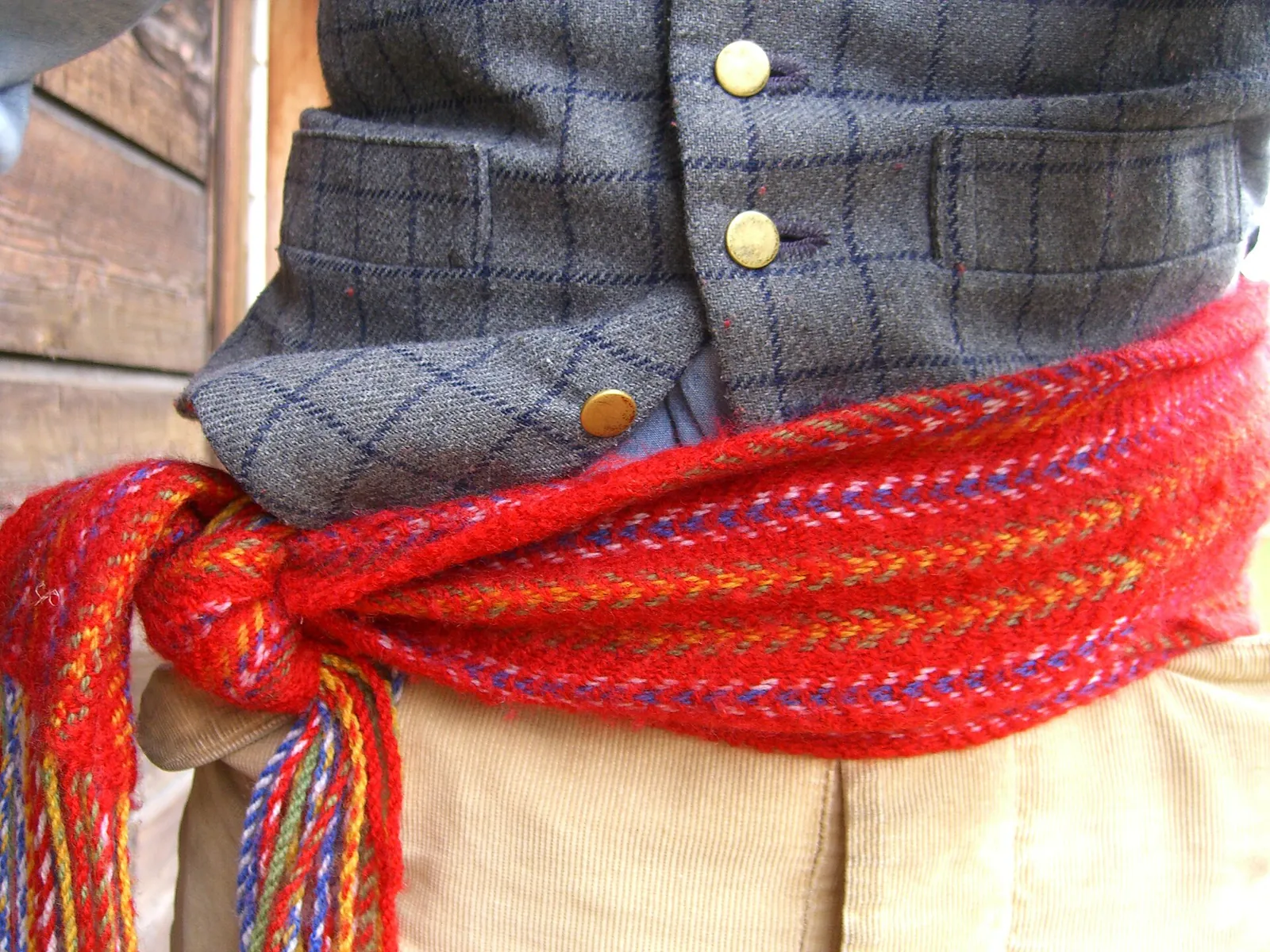
A sash worn at Fort Langley National Historic Site as part of fur trade dress. A museum label might describe it only as a costume from the past. Métis people today also wear the sash at gatherings as a sign of Nation and family. Two texts can describe the same object very differently.
Photo: Ceinture-fléchée-ftl by Themightyquill, Wikimedia Commons, CC BY 3.0