European contact changed goods, technologies, populations, and governments in Canada and in the Mexica world. First Nations, Métis, and Inuit oral histories are valid evidence beside written European accounts.
About 50 min one-to-one, or 60 min with a small group
1. Warm up (5 to 10 min): Ask the quick questions with notes closed.
2. Teach: Work through the lesson slides in order.
3. Coach practice: Use the student examples and try-it tasks.
4. Check: Finish with the outcome prompts below.
Warm-up questions
What do tutors think changed for First Nations peoples when European traders arrived?Listen for: Goods, tools, diseases and governments. Listen for range.
Who were the Mexica?Listen for: The people of Tenochtitlan in central Mexico, often called the Aztec. This sets up comparison.
Is an oral history good evidence?Listen for: Yes, when passed down with care. This sets up valid evidence.
What to check they understood
2.1
Ask them to describe two changes European contact brought to peoples in Canada.
A strong answer names changes such as new goods, population loss from disease, or new governments, with an example.
2.4
Ask them to explain why First Nations, Métis and Inuit oral histories are valid evidence beside written European records.
A strong answer describes how oral histories are carefully preserved and checked, and says written records also carry bias.
2.6
Ask them to compare one effect of contact in Canada with one in the Mexica world.
A strong answer names a similar effect such as disease or new government in both places, and one difference.
Likely gaps from earlier grades
Students may treat written records as automatically more reliable. Ask who wrote them and why.
Class slides
Work through the class slides
1 / 8
Objects and oral stories
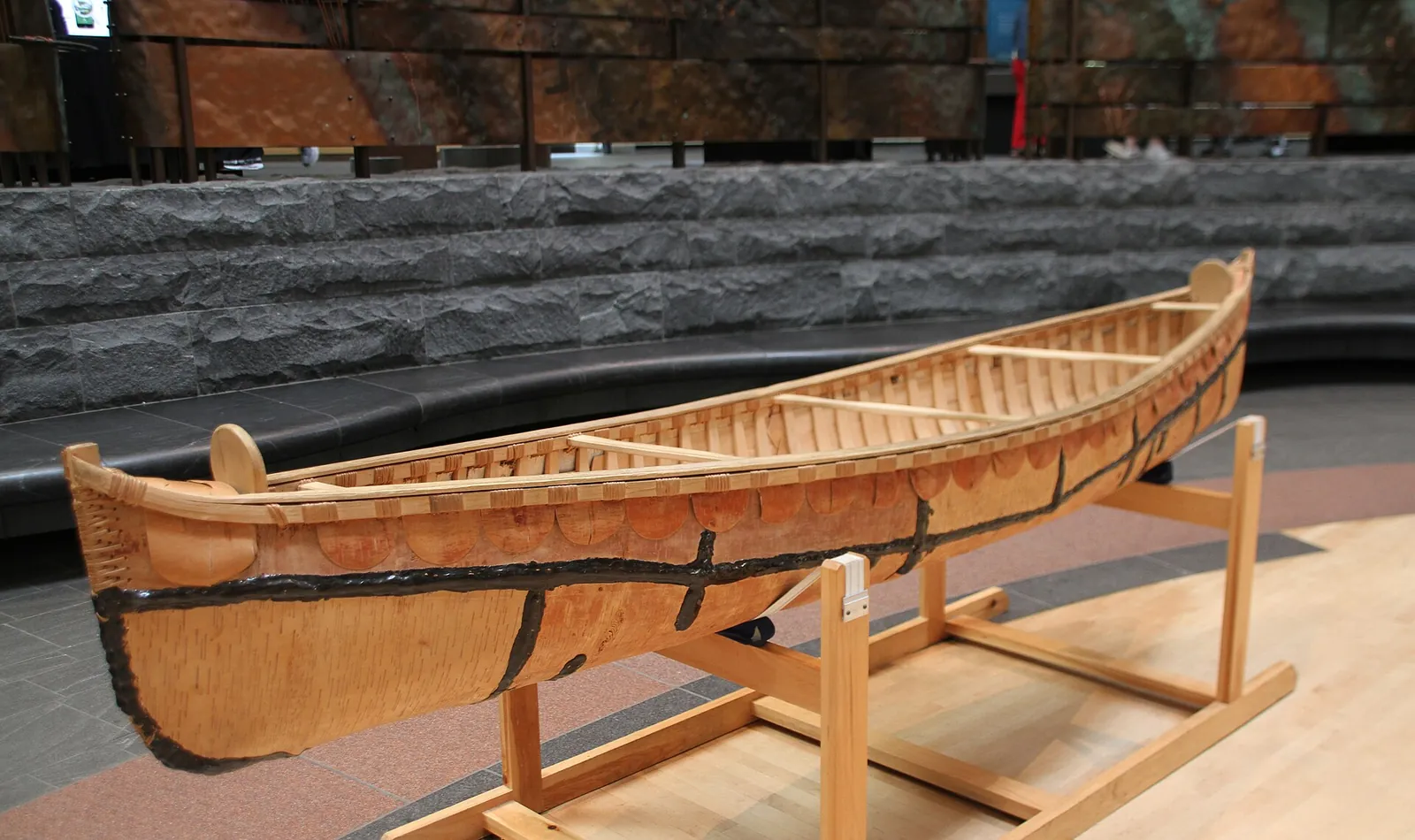
At a fur trade post, a copper pot and a firearm sit beside a birch canoe and a bag of pemmican.
In the Mexica capital, maize and cacao meet horses and steel after Spanish arrival in 1519, and Tenochtitlan falls in 1521.
An elder teaches a place story that a trader's journal tells from a European desk.
A birchbark canoe in a museum. Indigenous builders made canoes like this from birch bark, cedar, and spruce root. They were light enough to carry around rapids and strong enough to haul furs. That is why European traders adopted them for the inland trade.