Environment and prosperity

Land use, resource development agreements, and environmental legislation shape places and livelihoods. In northern Alberta's oil sands, prosperity perspectives and sustainability perspectives describe the same bitumen development.

Session outline

About 50 min one-to-one, or 60 min with a small group

  1. 1. Warm up (5 to 10 min): Ask the quick questions with notes closed.
  2. 2. Teach: Work through the lesson slides in order.
  3. 3. Coach practice: Use the student examples and try-it tasks.
  4. 4. Check: Finish with the outcome prompts below.

Warm-up questions

  • What are the oil sands?Listen for: Large oil deposits in northern Alberta. This sets up the case.
  • Who benefits from oil sands development?Listen for: Workers, companies and governments through royalties. Listen for prosperity.
  • What environmental concerns come with it?Listen for: Water use, tailings and emissions. This sets up sustainability.

What to check they understood

  • 3.8

    Ask them to explain how land use, resource agreements and environmental laws shape places and livelihoods in the oil sands region.

    A strong answer gives an example of each and explains its effect on jobs, land or communities.

  • 3.9

    Ask them to compare prosperity and sustainability perspectives on the oil sands.

    A strong answer describes each view with evidence, and makes a balanced, supported judgment.

Likely gaps from earlier grades

  • Students take one side with no evidence. Ask what the other side would say.

Work through the class slides

1 / 8

Oil sands and livelihoods

  • Northern Alberta's oil sands, in the Athabasca, Cold Lake, and Peace River deposits, are a major resource development region.
  • Workers, contractors, and public royalties and taxes are the prosperity evidence people in the region and in the province can point to.
  • Open pit mines, in situ wells, tailings, water use, and greenhouse gas emissions are the land, water, and climate evidence.
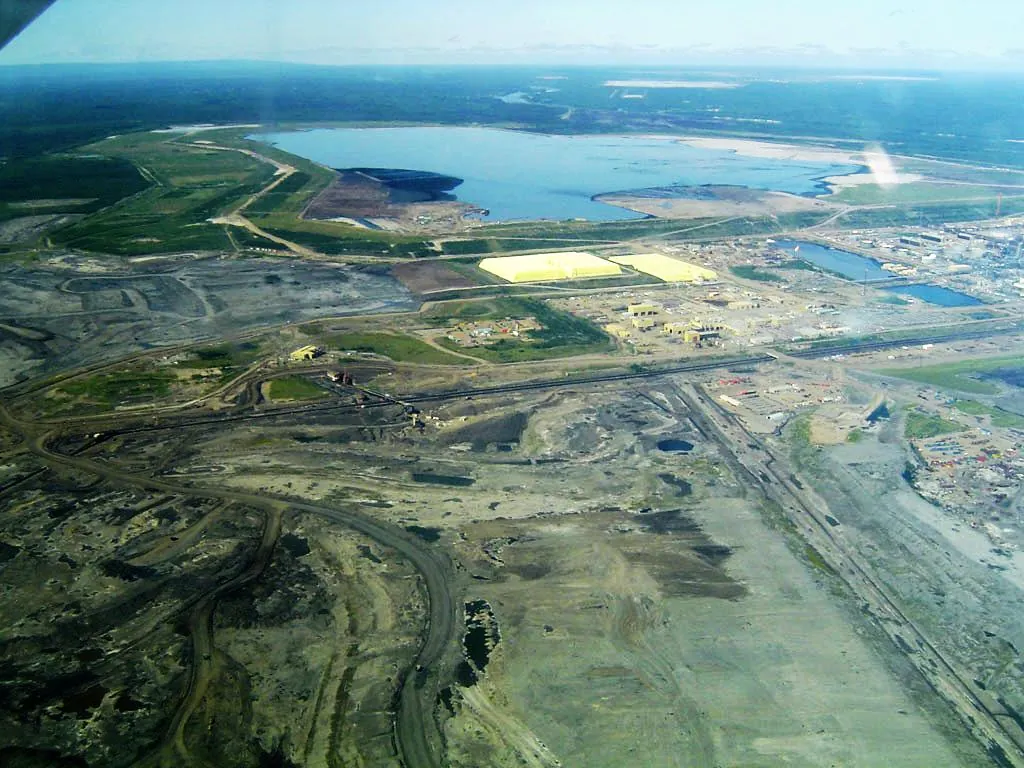
An aerial view of a large oil sands processing plant beside a wide tailings pond, with boreal forest beyond.

The Syncrude Mildred Lake plant north of Fort McMurray, in the Athabasca oil sands. The plant turns bitumen into synthetic crude oil and pays wages, royalties, and taxes. The wide pond holds tailings, the water and clay left after processing, which is a long term concern for the watershed.

Photo: Syncrude mildred lake plant by TastyCakes (colour adjusted by Jamitzky), Wikimedia Commons, public domain